
Red light camera tickets in Ontario are owner-liability offenses, meaning the registered vehicle owner receives the fine regardless of who was driving. That single fact shapes every dispute strategy available to you. Knowing how to fight a red light camera ticket starts with understanding that these tickets carry no demerit points and no insurance impact, but ignoring them creates serious enforcement consequences. You have options: pay the fine, request an early resolution meeting, or take the matter to a formal hearing. This article walks you through each path clearly.
How to fight a red light camera ticket: what you need first
Before you dispute a red light camera ticket, you need to gather the right information. Acting without it wastes time and weakens your position.
Start by reviewing your Notice of Violation carefully. It lists the fine amount, the deemed service date, and the deadline to respond. The 30-day response window begins from that deemed service date, not the date you actually open the envelope. Missing this window results in a default conviction and added fees.
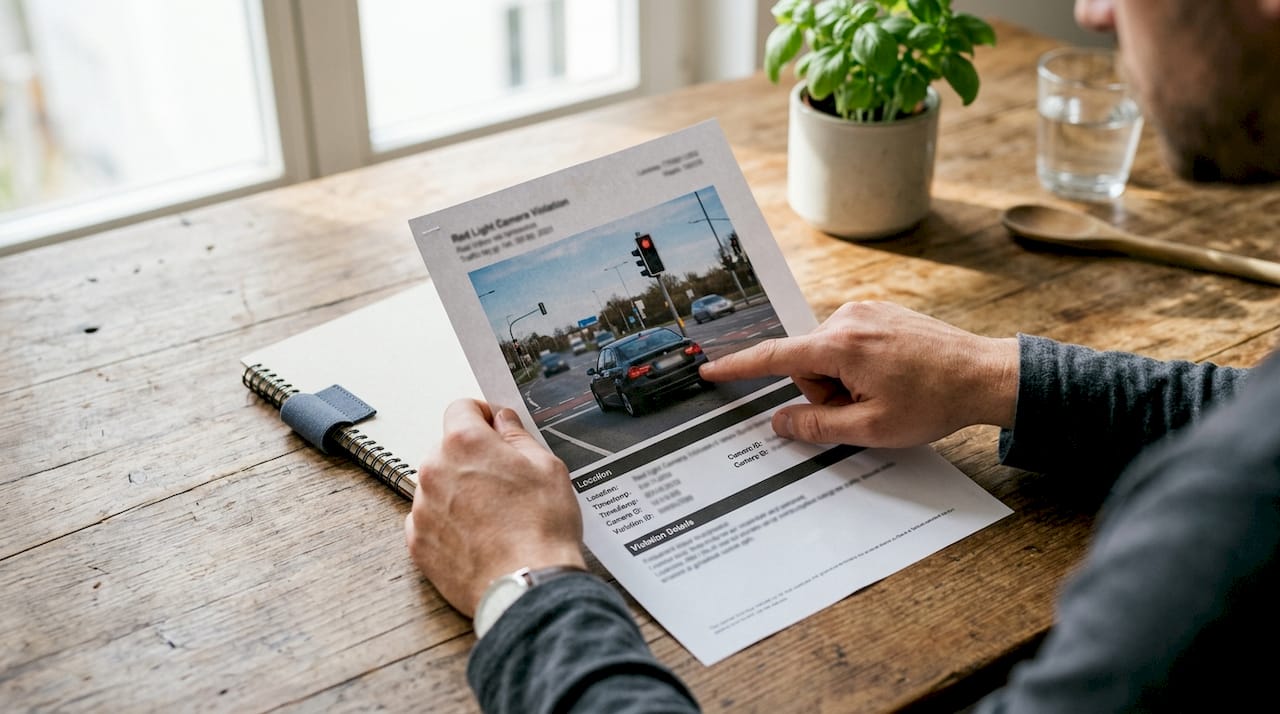
Next, request and review the photographic evidence. Camera images show the vehicle crossing the intersection after the signal turned red, with timestamps, location data, and the duration the light had been red. Study these images for any visible errors: wrong plate, obstructed view, or timing inconsistencies.
You also need to understand the ownership liability rule. Red light camera tickets are issued to the registered vehicle owner, and you cannot transfer that liability to another driver. If someone else was driving your car, you may seek reimbursement from them privately, but the ticket stays in your name.
Here is what to have ready before you respond:
- Your Notice of Violation with the response deadline clearly identified
- Copies of the photographic evidence from the camera system
- Your vehicle registration documents confirming ownership
- Any documentation supporting an extension request if you need more time
- Notes on any technical irregularities you spotted in the images
Pro Tip: Extensions of up to 60 days are available for extenuating circumstances. If you need more time to gather evidence or consult a paralegal, request the extension before your 30-day deadline expires.
What is the step-by-step dispute process in Ontario?
Ontario municipalities, including Toronto, Brampton, and Mississauga, now process most red light camera disputes through an Administrative Monetary Penalty System (AMPS) rather than traditional Provincial Offences Court. AMPS replaces court trials with two internal review stages: a screening review and a hearing review. This shift makes the process faster but also less familiar to most drivers.
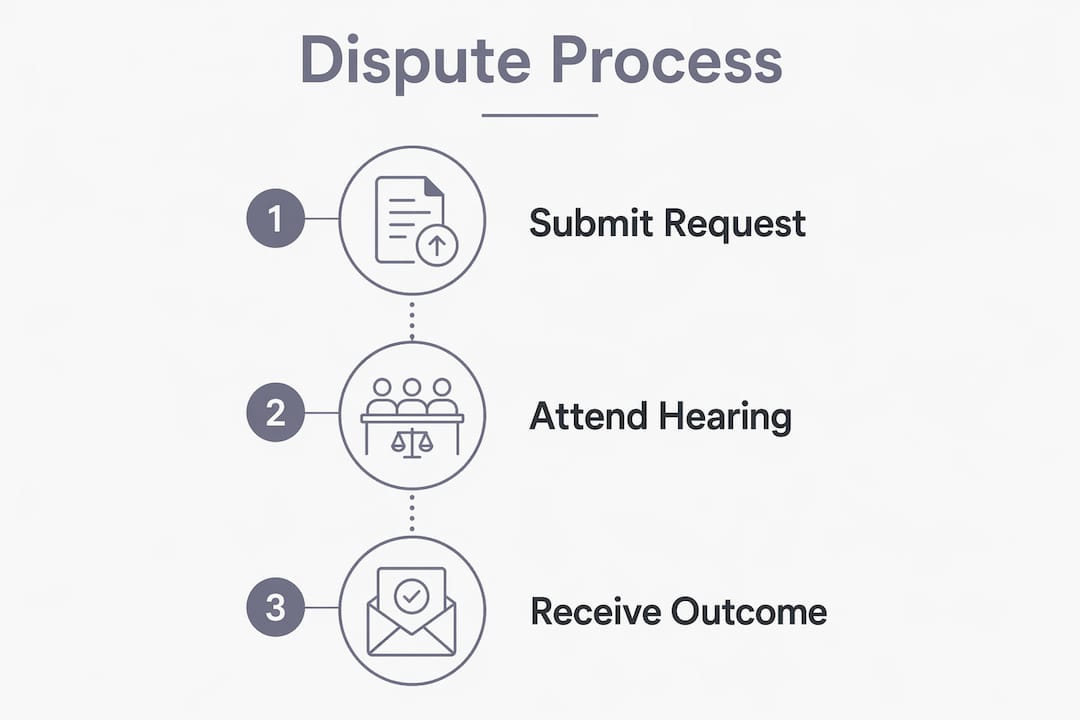
Step 1: Choose your response option
You have three choices when you receive a ticket:
- Pay the fine online, by mail, or in person. The ticket closes immediately with no further action required.
- Request a screening review (early resolution meeting). A screening officer reviews your case and may reduce the fine or offer a payment plan.
- Request a hearing review (formal dispute). An independent adjudicator hears your case and makes a binding decision.
Step 2: Submit your request
| Response type | How to submit | Typical timeline |
|---|---|---|
| Pay the fine | Online, in person, or by mail | Immediate closure |
| Screening review | Online portal or by mail | 4–8 weeks for appointment |
| Hearing review | Online portal or by mail after screening | 8–16 weeks for hearing date |
| Extension request | Written request before deadline | Up to 60 additional days |
Submit your request before the 30-day deadline. Most municipalities offer an online portal for submissions, which creates a timestamped record of your request.
Step 3: Attend your screening or hearing
At a screening review, you speak with a city screening officer. This is not a formal legal proceeding, but it is your first real opportunity to negotiate. Early resolution meetings commonly result in reduced fines or payment plans, and they take far less time than a full hearing.
If the screening outcome does not satisfy you, you can escalate to a hearing review. At this stage, an independent adjudicator reviews the evidence and hears your arguments. This is where legal defenses matter most.
Step 4: Understand your outcome
If the adjudicator rules against you, the original fine stands, and you must pay it. If they rule in your favor, the penalty is reduced or dismissed. Failing to respond within any deadline leads to a default conviction, added administrative fees, and enforcement action.
What defenses actually work against red light camera tickets?
The legal bar for overturning a red light camera ticket at a hearing is high. Ontario courts presume that camera systems are accurate and functioning properly. That presumption puts the burden on you to present concrete evidence that the system failed or that the evidence is flawed.
Defenses that have a realistic chance of success include:
- Missing or expired camera certification. If the camera system lacks valid certification records, the evidence may be inadmissible.
- Photographic errors. If the images show the wrong plate, a different vehicle model, or a timestamp inconsistency, you have grounds to challenge the identification.
- Procedural failures. If the Notice of Violation was not served correctly or the municipality failed to follow its own AMPS procedures, the case may be dismissed on procedural grounds.
- Emergency circumstances. If you can document that you entered the intersection to yield to an emergency vehicle or to avoid a collision, this may support a defense.
Defenses that do not work include personal claims like "I was driving safely" or "the light just turned red." The camera evidence is objective, and the owner-liability rule means your driving behavior is not the legal question at issue.
Pro Tip: Prosecution relies heavily on certified evidence of camera functionality. Requesting disclosure of the camera's calibration and certification records before your hearing is one of the few concrete ways to find a technical flaw.
The prosecution's reliance on certified evidence of camera functionality and vehicle ownership is typically difficult to overcome without strong contrary evidence. Most successful disputes at the hearing stage involve documented technical failures, not driver arguments.
What happens if you ignore a red light camera ticket?
Ignoring a red light camera ticket is the worst financial decision you can make. The consequences escalate quickly and become difficult to reverse.
- Default conviction. Missing your response deadline triggers an automatic conviction with no hearing.
- Added fees. Administrative late fees stack on top of the original fine.
- Plate denial at ServiceOntario. You cannot renew your vehicle permit or license plates until all outstanding fines and fees are paid in full.
- Vehicle grounding. Plate denial effectively prevents you from legally operating the vehicle, since driving with expired plates is a separate offense.
There is no jail time and no insurance penalty tied to red light camera tickets. However, plate denial is a powerful enforcement tool that affects your ability to use your vehicle at all.
Plate denial at ServiceOntario is the primary enforcement mechanism for unpaid red light camera tickets in Ontario. You cannot renew your vehicle registration until every dollar of the fine and any added fees is paid. That makes ignoring a ticket far more costly than disputing or paying it promptly.
The cost-benefit calculation is straightforward. A typical red light camera fine in Ontario ranges from $325 to $400. An early resolution meeting may reduce that amount. A formal hearing costs you time and possibly paralegal fees, but it may result in a full dismissal if you have strong grounds. Paying promptly or negotiating early is almost always cheaper than default.
Key Takeaways
Fighting a red light camera ticket in Ontario requires acting within 30 days, gathering photographic evidence, and choosing the right dispute path under the AMPS framework.
| Point | Details |
|---|---|
| 30-day response deadline | You must respond to your Notice of Violation within 30 days of the deemed service date. |
| Owner liability applies | The registered vehicle owner is responsible regardless of who was driving at the time. |
| AMPS replaces court trials | Most Ontario municipalities now use screening and hearing reviews instead of Provincial Offences Court. |
| Technical defenses work best | Camera certification flaws or photographic errors are the strongest grounds for dismissal. |
| Plate denial enforces payment | Unpaid fines trigger plate denial at ServiceOntario, preventing vehicle registration renewal. |
What I've learned about fighting these tickets in Ontario
After working with Ontario drivers on traffic matters for years, I can tell you that most people who fight red light camera tickets are not trying to prove innocence. They are trying to reduce a fine they cannot easily afford or to avoid a default conviction they did not know was coming.
The single biggest mistake I see is waiting. Drivers receive the Notice of Violation, feel uncertain about what to do, and let the 30-day window close. A default conviction is almost always worse than any outcome you would get from a screening review.
My honest view is that the early resolution meeting is underused. Most drivers assume they need to go to a full hearing to get any result. They do not. A screening officer has real authority to reduce fines, and the process takes far less time than a formal dispute. For most drivers, that meeting is the right first move.
Fighting the ticket all the way to a hearing makes sense when you have concrete technical evidence: a certification gap, a clear photographic error, or a documented procedural failure. Without that, a hearing is unlikely to produce a dismissal, and the time cost is significant.
Licensed paralegals add real value here, not because the process is impossibly complex, but because they know what disclosure to request, what technical arguments hold up, and how to present a case efficiently. If your fine is substantial or you have reason to believe the camera evidence is flawed, getting professional help pays for itself.
— Maninder
How Peeltrafficdefence can help with your ticket
Receiving a red light camera ticket does not mean you have to accept the fine at face value. Peeltrafficdefence represents Ontario drivers across the province, including the Peel Region, and handles the full dispute process on your behalf.

Whether you want to request a screening review, challenge the evidence at a hearing, or simply understand your options before the deadline passes, Peeltrafficdefence provides licensed paralegal representation tailored to your situation. The team knows Ontario's AMPS procedures, understands what disclosure to request, and has experience identifying the technical arguments that actually move the needle. Visit Peeltrafficdefence to get a case evaluation before your 30-day window closes. Drivers who have worked with the firm share their outcomes on the client testimonials page.
FAQ
Can you fight a red light camera ticket in Ontario?
Yes, you can dispute a red light camera ticket in Ontario by requesting a screening review or a formal hearing review through the AMPS process within 30 days of the deemed service date.
Does a red light camera ticket affect your insurance or demerit points?
No. Red light camera tickets in Ontario carry no demerit points and no insurance penalties because they are owner-liability offenses, not driver-based convictions.
What happens if you ignore a red light camera ticket?
Ignoring the ticket results in a default conviction, added fees, and plate denial at ServiceOntario, which prevents you from renewing your vehicle registration.
What is the best defense against a red light camera ticket?
The strongest defenses involve documented technical failures such as missing camera certification records or clear errors in the photographic evidence. Personal claims about driving behavior do not succeed under Ontario's owner-liability framework.
How long does the dispute process take in Ontario?
A screening review typically takes 4–8 weeks from submission to appointment. A formal hearing review can take 8–16 weeks or longer depending on the municipality's caseload.